Introduction
Chai Hu Shu Gan San (柴胡疏肝散) is a traditional Chinese herbal formula used in Chinese medicine primarily to regulate constrained Liver Qi and relieve pain and distension associated with Qi stagnation.
The name can be translated roughly as “Bupleurum Powder to Spread the Liver.” It is particularly associated with patterns in which emotional tension, frustration or stress are accompanied by physical symptoms such as chest or rib-side discomfort, digestive disturbance, abdominal distension (bloating) or menstrual pain.
It is not simply a formula for “stress” or “liver problems”. As with all Chinese herbal formulas, its suitability depends on the underlying pattern identified by a practitioner.
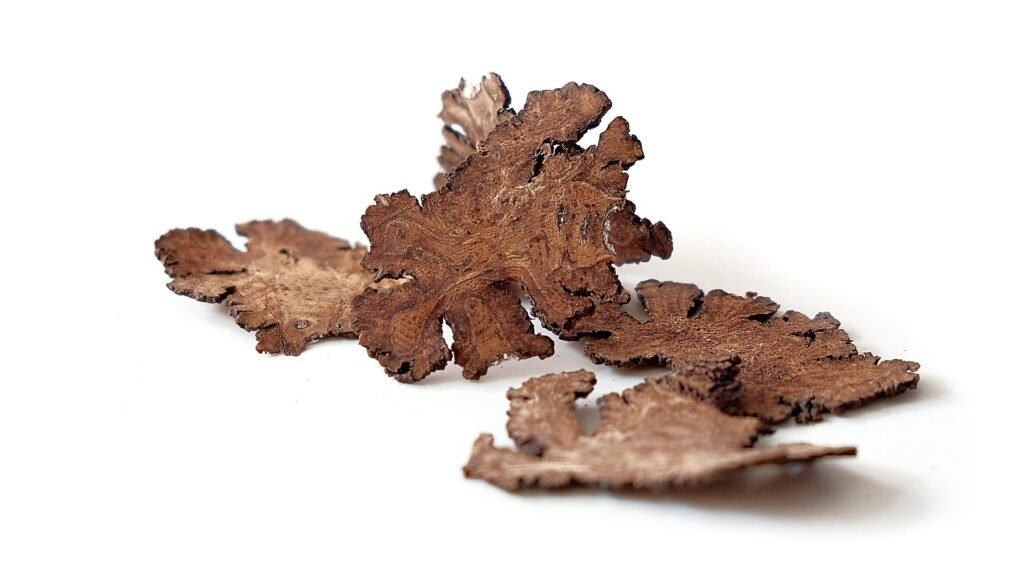
What is Chai Hu Shu Gan San?
In Chinese medicine, the Liver is closely associated with the smooth movement of Qi throughout the body. When Liver Qi becomes constrained, Qi may fail to circulate properly. This can produce a characteristic combination of emotional and physical symptoms.
A person with Liver Qi stagnation might experience irritability, frustration or a tendency to sigh, together with sensations of fullness, distension or pain. Digestive symptoms and menstrual problems are also common.
Chai Hu Shu Gan San is designed particularly for Liver Qi stagnation accompanied by pain. Its action is stronger on moving and regulating Qi than that of some of the other commonly used formulas for Liver Qi stagnation, such as Xiao Yao San
The history of Chai Hu Shu Gan San
Chai Hu Shu Gan San is traditionally associated with Wang Ken Tang (王肯堂), a physician of the Ming dynasty. Wang Ken Tang was a prominent physician and medical scholar whose writings brought together knowledge from a number of earlier Chinese medical traditions.
The formula is recorded in his Zheng Zhi Zhun Sheng (證治準繩), a major medical work published in the early seventeenth century. Its development reflects the long-standing Chinese medical understanding of the relationship between emotional constraint, the movement of Liver Qi and physical pain.
The name Chai Hu Shu Gan San describes its principal action: Chai Hu is Bupleurum, while Shu Gan means to soothe or spread the Liver. The formula is therefore intended to restore the smooth movement of Liver Qi when it has become constrained.
Although the formula has a long history, its traditional use should not be reduced to a single modern indication. Chinese herbal medicine uses formulas according to patterns, and the same symptom may arise from quite different underlying patterns in different people.
The ingredients of Chai Hu Shu Gan San
The traditional formula contains seven herbs:
- Chai Hu (Bupleurum root) – helps regulate the Liver and move constrained Qi.
- Bai Shao (white peony root) – nourishes and preserves Blood while helping to moderate Liver tension and pain.
- Xiang Fu (Cyperus rhizome) – strongly regulates Qi and is particularly useful for pain and menstrual symptoms.
- Chuan Xiong (Ligusticum rhizome) – moves Qi and Blood and helps relieve pain.
- Chen Pi (aged tangerine peel) 🍊 – regulates Qi and supports the digestive function of the Spleen and Stomach.
- Zhi Ke (bitter orange) 🍊 – helps move Qi and relieve distension in the chest and abdomen.
- Gan Cao (licorice root) – harmonises the other ingredients and helps relieve spasm and pain.
The formula therefore combines herbs that move Qi with herbs that protect and nourish, rather than simply forcing Qi to move. The first two herbs are the core of the formula and are a specala combination called a Dui Yao
What is Chai Hu Shu Gan San used for?
The classical use of Chai Hu Shu Gan San is Liver Qi stagnation with associated pain and distension. Depending on the individual’s pattern, symptoms may include:
Emotional tension and stress
Liver Qi stagnation is often associated with frustration, irritability, emotional tension and a feeling of being “stuck”. Some people notice that physical symptoms become worse during periods of stress.
This does not mean that Chai Hu Shu Gan San is simply an herbal treatment for anxiety or stress. In Chinese medicine, the emotional symptoms are considered alongside the physical signs to determine the underlying pattern.
Digestive problems
When Liver Qi is constrained, it can interfere with the normal movement of Qi in the digestive system. This may contribute to symptoms such as:
- abdominal distension
- bloating
- belching
- a feeling of fullness
- digestive discomfort
- pain that varies with emotional tension
The formula is therefore sometimes considered when digestive symptoms have a strong relationship with stress or emotional constraint.
Menstrual pain and irregularities
The free movement of Liver Qi is particularly important in Chinese medicine in relation to menstruation. Qi stagnation may contribute to abdominal or menstrual pain, breast distension and irritability before the period.
Chai Hu Shu Gan San may be considered when these symptoms fit the broader pattern of Liver Qi stagnation, particularly when there is a significant component of pain.
Chest and rib-side discomfort
Pain or a sensation of fullness in the chest, sides of the ribs or upper abdomen is a particularly characteristic manifestation of constrained Liver Qi.
The formula’s combination of Qi-moving herbs is intended to restore movement and relieve this type of discomfort.
Recognising the Liver Qi stagnation pattern
One of the advantages of thinking in terms of Chinese medicine patterns is that the same symptom can have very different causes.
For example, menstrual pain does not automatically mean that Chai Hu Shu Gan San is appropriate. A practitioner might consider whether the pain is related to Qi stagnation, Blood stasis, Cold, Heat, deficiency or another pattern.
Signs that may point towards Liver Qi stagnation include:
- irritability or frustration
- frequent sighing
- a feeling of constraint or tension
- distension or fullness
- pain that moves or changes in intensity
- chest or rib-side discomfort
- digestive symptoms associated with emotional tension
- menstrual symptoms associated with constraint
A wiry pulse is also commonly associated with Liver Qi stagnation, although the pulse and tongue have to be considered in the context of the whole presentation.
Chai Hu Shu Gan San and Xiao Yao San
Chai Hu Shu Gan San is sometimes confused with Xiao Yao San (逍遥散) because both formulas contain Chai Hu and Bai Shao and both are commonly associated with Liver Qi stagnation.
There is, however, an important difference in emphasis.
Xiao Yao San is traditionally used when Liver Qi stagnation is accompanied by Blood deficiency and weakness of the Spleen. It therefore has a stronger nourishing and supporting function.
Chai Hu Shu Gan San, by contrast, places greater emphasis on moving constrained Qi and relieving pain.
This distinction is important because two people might both complain of stress, digestive problems or menstrual symptoms while requiring completely different formulas according to their underlying patterns.
How a practitioner decides whether to use it
A Chinese medicine practitioner would not normally prescribe Chai Hu Shu Gan San simply because someone has one of the symptoms listed above.
The overall pattern needs to be considered. This might include:
- the nature, location and timing of pain
- emotional state
- digestive function
- menstrual history
- sleep
- appetite
- tongue appearance
- pulse quality
- signs of deficiency, Heat, Cold, Blood stasis or Phlegm
For example, a person with pronounced Liver Qi stagnation and pain may be a very different case from someone whose symptoms superficially resemble Liver Qi stagnation but are primarily caused by Blood deficiency.
This pattern-based approach is one of the central features of traditional Chinese herbal medicine.
Is Chai Hu Shu Gan San suitable for everyone?
No. Chinese herbal formulas are prescribed according to the individual’s constitution and pattern, and the traditional formula may not be appropriate simply because the symptoms appear to match its general indications.
There can also be potential interactions between Chinese herbal medicines and pharmaceutical drugs. Anyone taking medication, who is pregnant or breastfeeding, or who has a significant medical condition should discuss the use of Chinese herbal medicine with an appropriately qualified practitioner and, where appropriate, their doctor.
Chai Hu Shu Gan San at Blue Dragon Acupuncture
At Blue Dragon Acupuncture, Chinese herbal formulas are considered as part of an individual’s overall Chinese medicine diagnosis rather than prescribed solely on the basis of a single symptom.
If you are interested in whether Chai Hu Shu Gan San might be appropriate for your particular symptoms, an individual consultation can help determine whether the pattern it treats is actually present and whether another formula would be more suitable.
Leave a Reply